












Ever felt like your dining room is just a collection of furniture floating in a void? I’ve been there, staring at my hardwood floors wondering why the room felt so cold. Rug layering is the secret sauce for that high-end, lived-in vibe without needing a designer’s bank account. It’s like a stylish sweater for your floor. Ready to turn your dining space into a plush sanctuary? Let’s get your feet happy.
The Dependable Jute Base
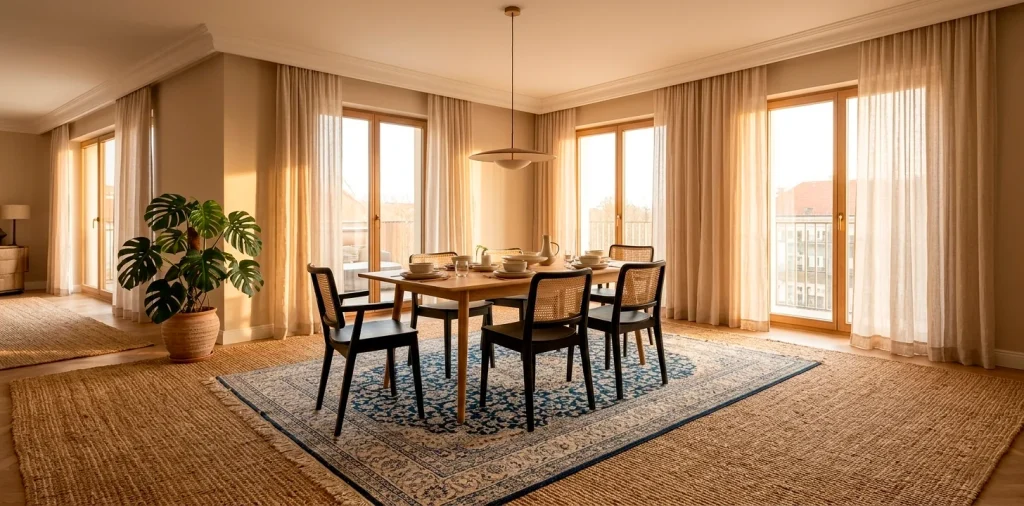
Natural fibers serve as the ultimate workhorse in the decor world. I always start with a massive jute or sisal rug because these materials are basically bulletproof against crumbs and the constant shuffle of dining chairs. They provide that organic, earthy foundation that tells your guests you have your life together.
This oversized base creates a clear boundary for the dining area, which is vital in open-concept homes. Plus, it makes any colorful rug you place on top look instantly more expensive and intentional. If you need help picking the right backdrop, check out these best neutral farmhouse dining room paint colors to match your rug.
Pattern Play on Neutral Ground
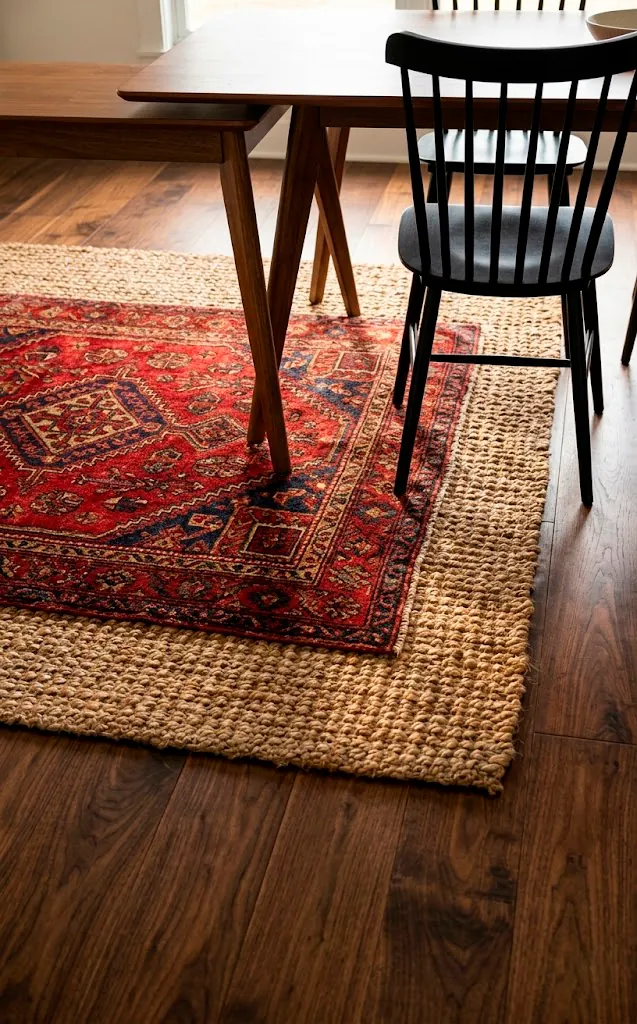
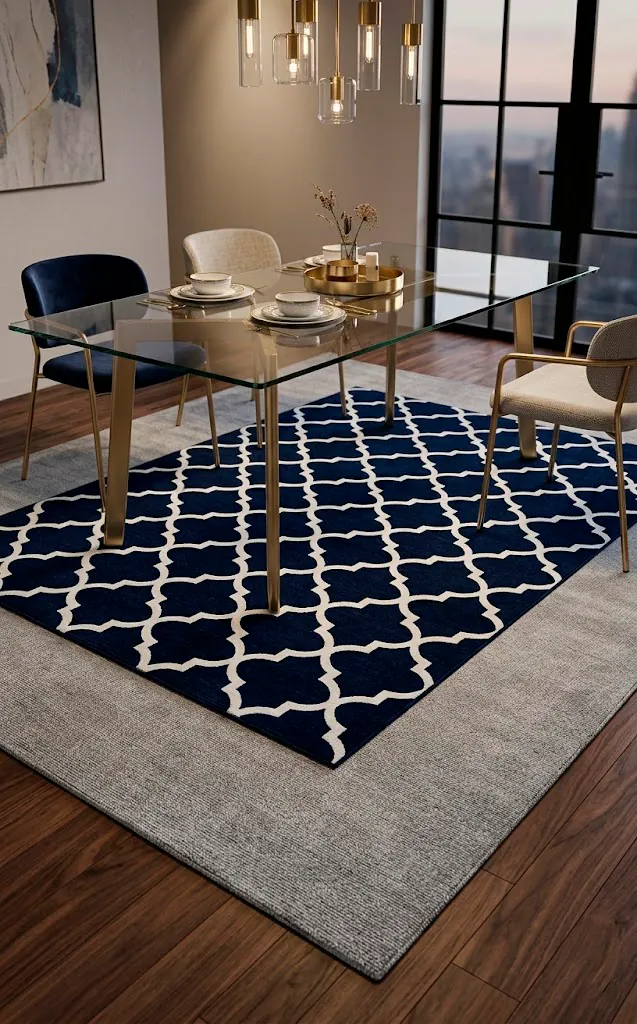
Why settle for one boring rug when you can double the fun? I love tossing a smaller, vibrant pattern right over a quiet, neutral base. It creates a visual focal point that draws the eye directly to the center of the room. This setup works wonders because the neutral border keeps the bold pattern from overwhelming your senses. Ever noticed how a wild design pops when it has a silent partner to sit on? It’s a low-risk way to experiment with colors you might usually avoid. IMO, it’s the easiest way to refresh a room without painting walls. 🎨
Sheepskin Softness for Chilly Nights
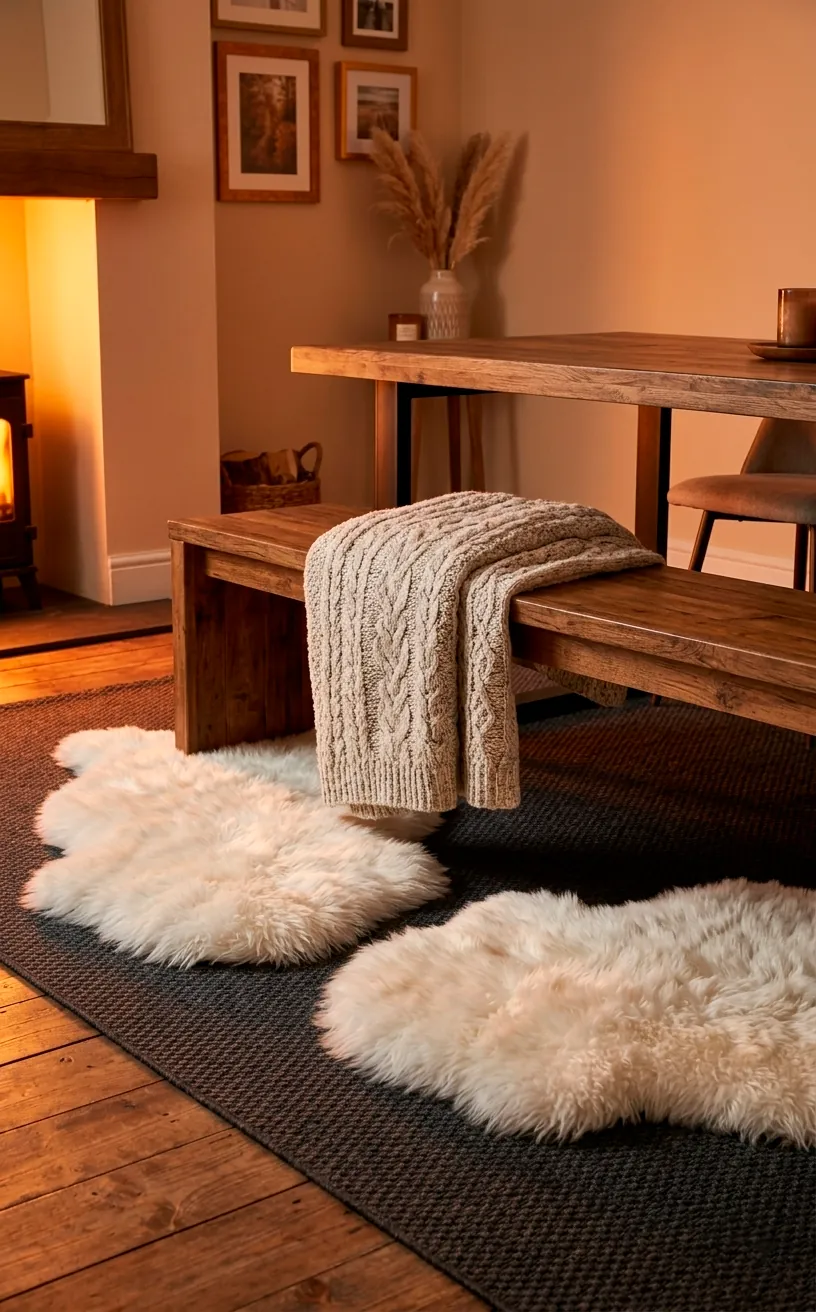
If you want peak coziness, you need to think about texture, not just color. I occasionally throw a faux sheepskin or two over the corners of a flat-weave rug. It adds a layer of luxury that feels incredible underfoot during those long dinner parties.
Don’t worry about it looking messy. The organic shape of a sheepskin breaks up the rigid lines of your table and chairs. It adds a bit of ‘Scandi-chic’ flair that makes the room feel soft and inviting.
This look specifically helps during winter. Does anything feel worse than cold toes while eating soup? I don’t think so.
The Geometric Duo
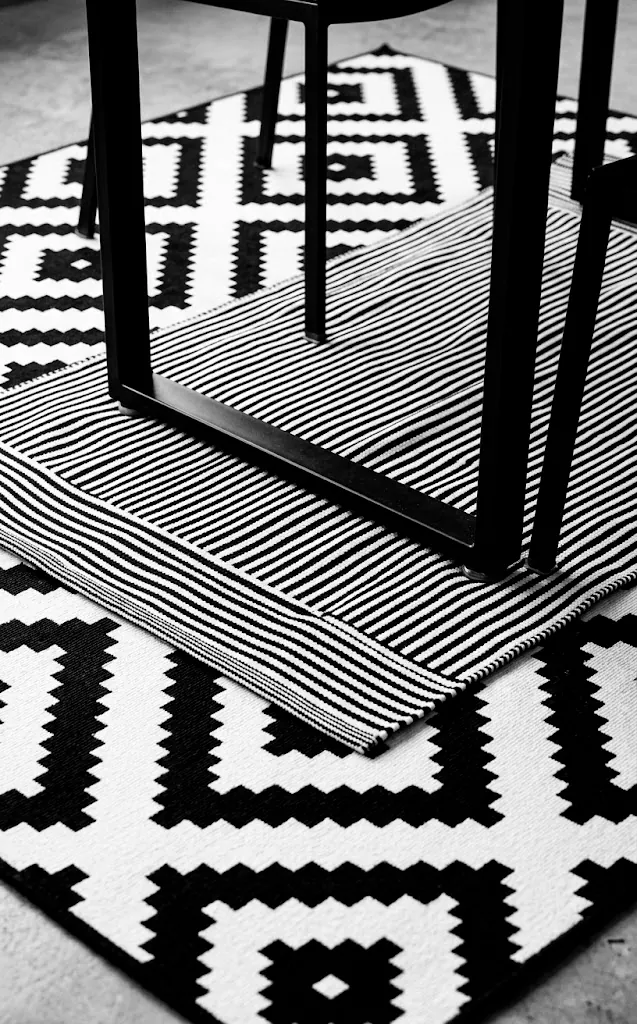
Mixing two different geometric patterns sounds like a recipe for a headache, right? Actually, I find it works brilliantly if you keep the color palette consistent. Try a large-scale diamond pattern on the bottom with a tight, small-scale stripe on top. Keeping them in the same family—like black, white, and gray—makes the mix feel sophisticated rather than chaotic.
You basically create a custom rug that nobody else has. It’s a clever way to show off your personality without screaming for attention. Plus, busy patterns are masters at hiding the occasional wine spill. Win-win!
Vintage Persian Over Sisal
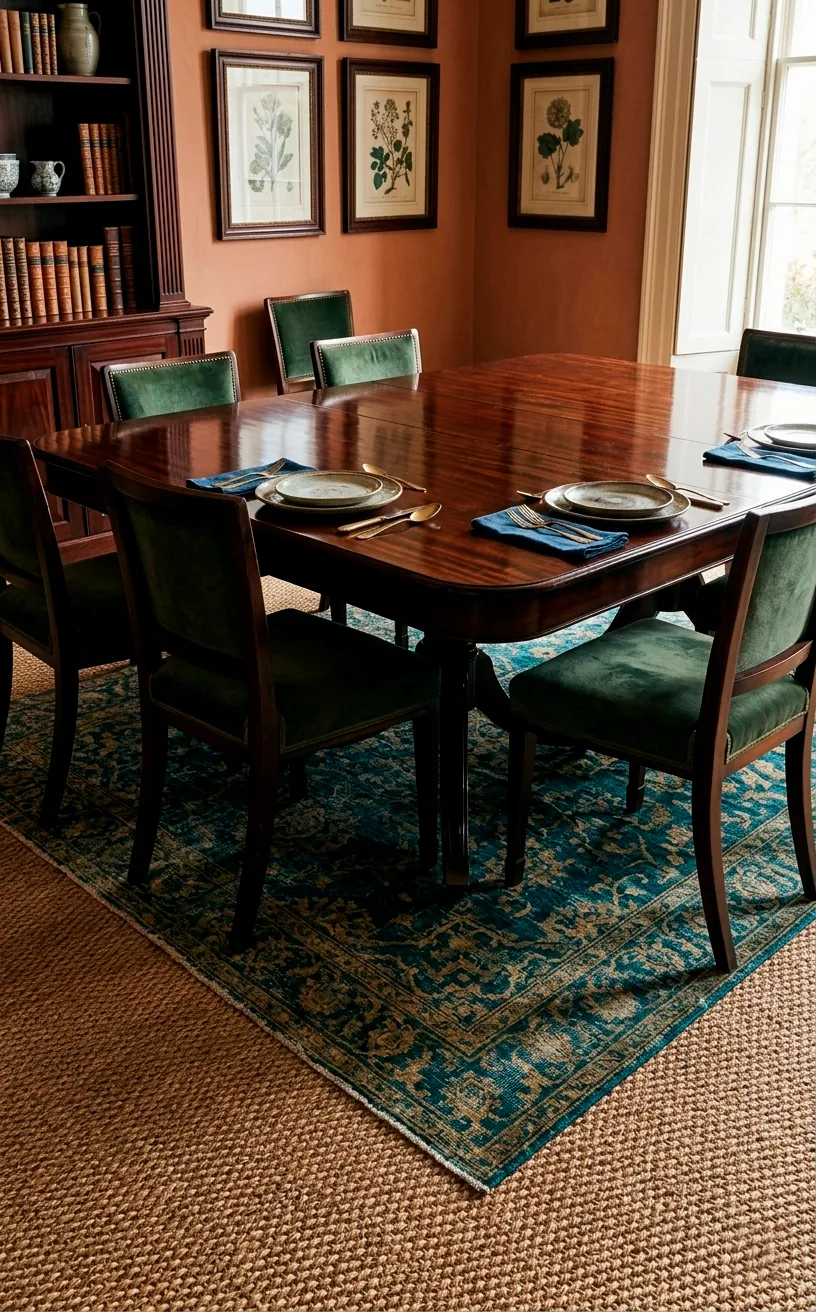
This is the ‘Grandmillennial’ dream come true. I strongly recommend pairing an old-soul Persian rug with a rough-and-tumble sisal base. The contrast between the refined silk or wool and the scratchy, natural fiber is pure design magic.
It feels grounded yet upscale. You get the durability of the sisal for the heavy traffic areas and the beauty of the vintage piece right where your feet rest.
I’ve used this combo in my own home to hide a stained spot on an expensive rug. Sarcasm aside, it’s a brilliant cover-up!
Rug layering tips:
- Leave at least 12 inches of the bottom rug visible.
- Ensure the top rug is small enough that chairs don’t catch on the edge.
- Use a thin rug pad between the layers to prevent sliding.
Round on Square Dynamics
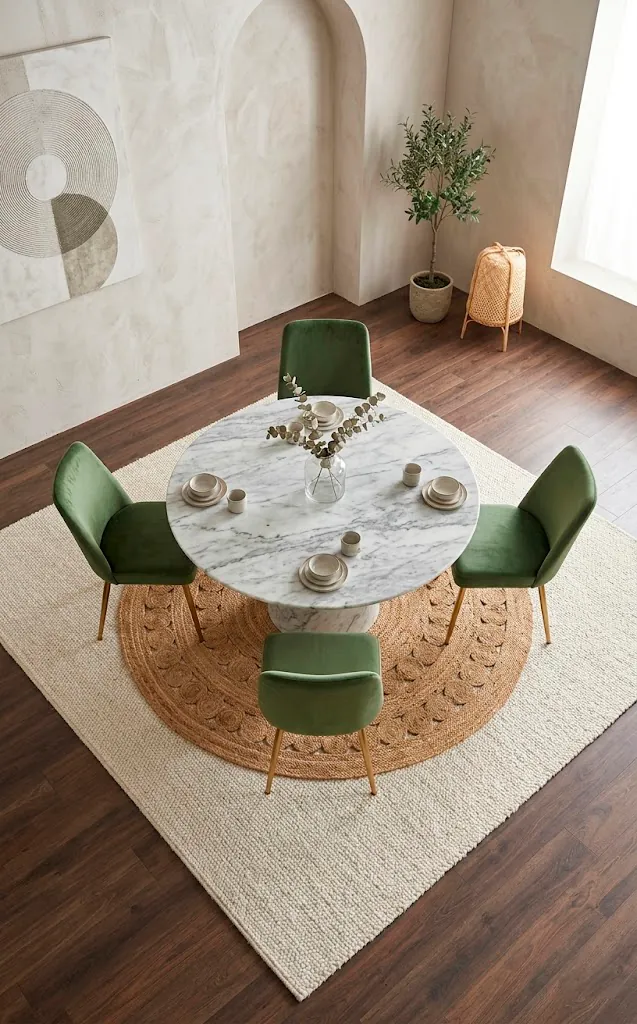
Who says rugs have to be the same shape? I love breaking the rules by placing a round rug on top of a larger rectangular one. This layering technique softens the sharp corners of a typical dining room and creates a nice ‘halo’ effect around a circular table. It makes the space feel more intimate and curated. Ever felt like your room was too ‘boxy’? This is your cure. Just make sure the bottom rug is large enough to act as a proper frame for the round star of the show. FYI, this is a total pro move for small dining nooks.
The Monochrome Texture Mix
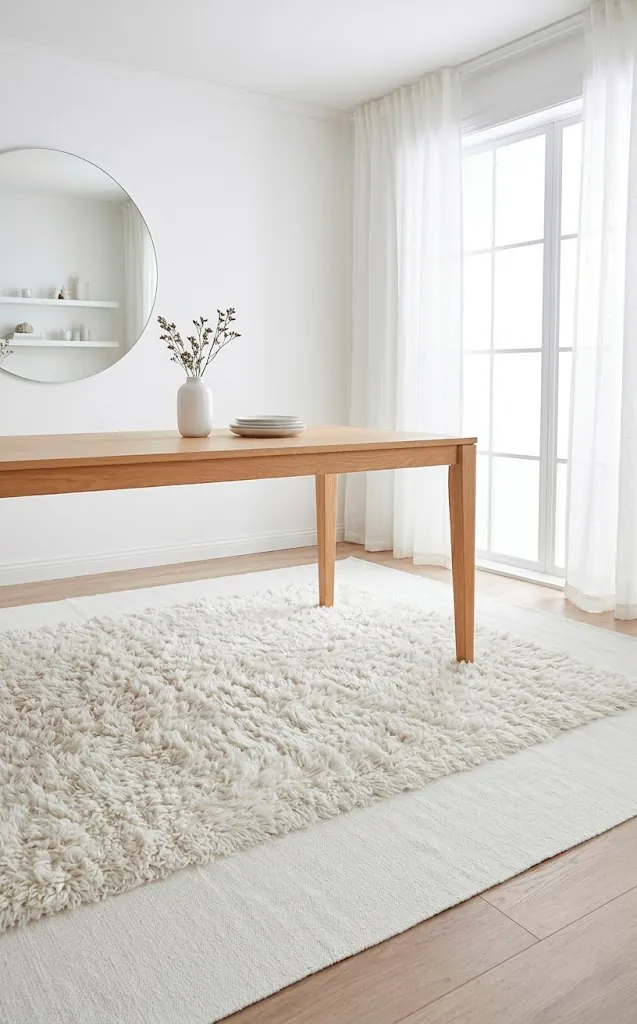
You don’t need wild colors to make a statement. I often layer two rugs in the exact same shade of cream or beige, but with completely different textures. Think a flat-weave cotton rug topped with a high-pile shag or a carved wool piece.
This creates a subtle, sophisticated depth that feels incredibly high-end. It’s like wearing an all-black outfit with different fabrics—it just looks expensive.
I find this approach perfect for those who want a ‘quiet luxury’ vibe. It keeps the room feeling calm and airy while providing that necessary cozy factor under the table.
Bohemian Bliss with Kilims
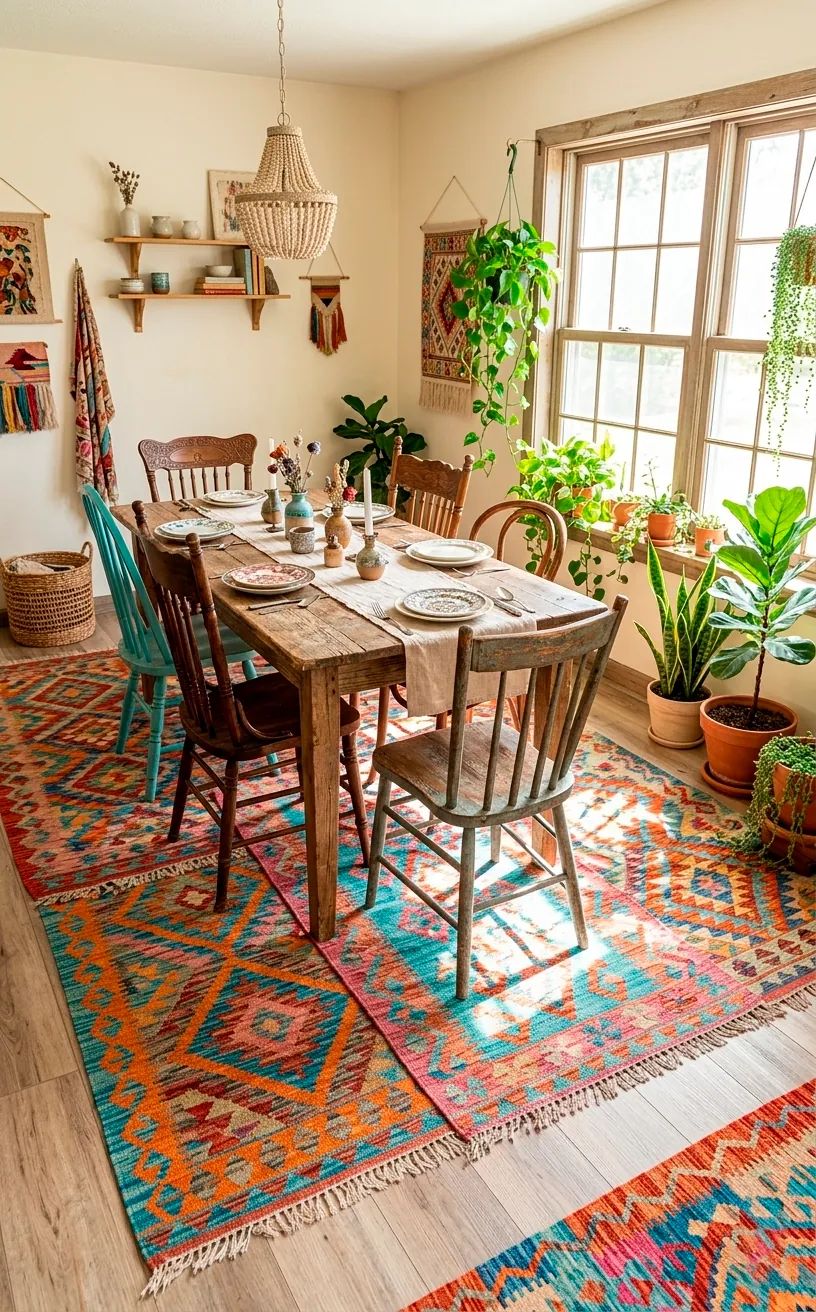
For the free spirits out there, layering colorful Kilim rugs is the way to go. I love the thin, flat-weave nature of Kilims because they layer perfectly without creating a tripping hazard. You can overlap them at slight angles to cover a large area with a mosaic of patterns.
This look celebrates imperfection. It’s vibrant, energetic, and hides every single crumb your toddler (or husband) drops. If you love this eclectic energy, you might enjoy looking at these vibrant kilim rugs for other parts of your house. It brings a global, traveled feel to your dinners.
The Offset Angle Strategy
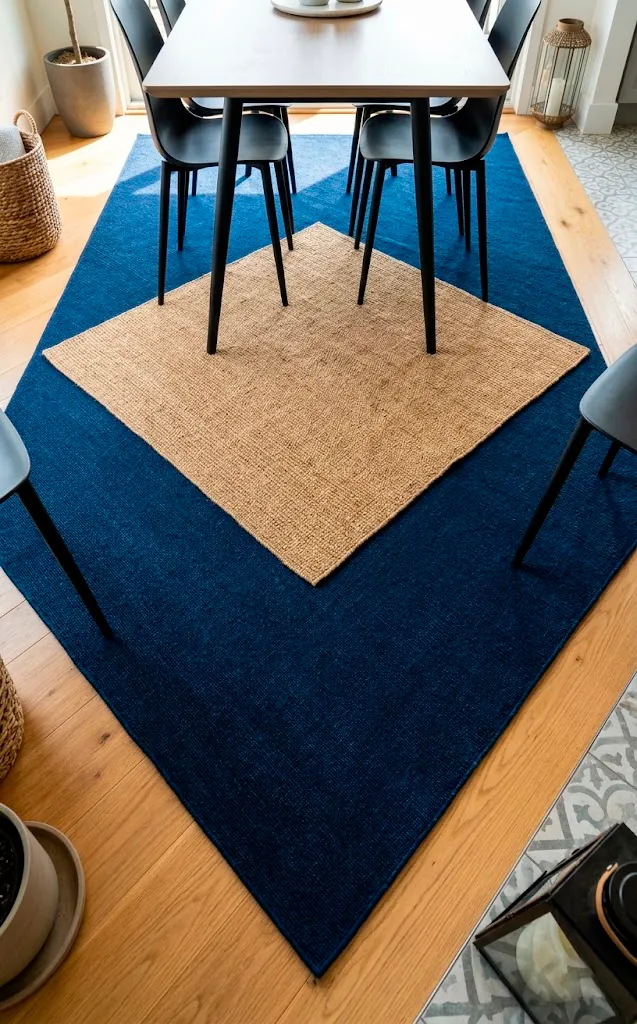
If your room feels a bit too stiff, try the offset angle. I don’t always align my rugs perfectly. Sometimes, I place the top rug at a 45-degree angle to the base rug. This adds a sense of movement and makes the room feel less formal.
It’s a great trick for awkward-sized rooms where a standard layout feels cramped. Just make sure the table still sits mostly on the top rug so it doesn’t wobble.
Does it take a little more effort to get the placement right? Yes. Is the ‘cool factor’ worth it? Absolutely. 😉
Hide and Seek with Cowhides
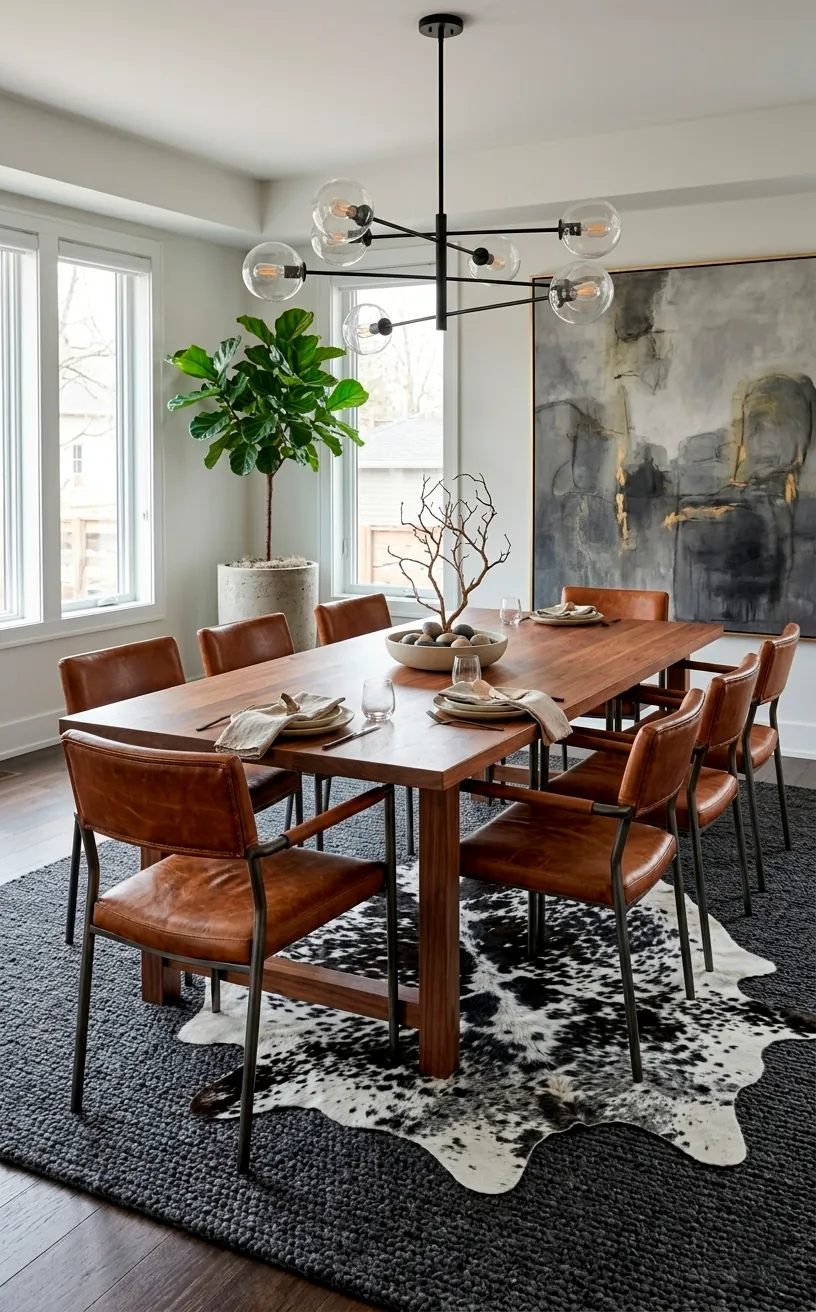
Faux cowhides are the ultimate layering ‘cheat code.’ I love them because their irregular shape fits literally anywhere. You can toss one over a standard rectangular rug to instantly break up the monotony. They add an organic element that feels both rustic and modern at the same time.
Plus, hides are incredibly easy to clean. They don’t trap dust like high-pile rugs do, which is a major win for the dining room. I think every room needs one slightly ‘wild’ element, and this is the most practical way to do it.
Final Thoughts on Layering
Layering rugs is the easiest way to add soul to a cold dining room. Whether you go for a classic jute base or a wild cowhide accent, you’re creating a space that feels intentional and cozy. Remember, there are no strict rules—if it looks good to you, it works! Which of these styles are you grabbing first for your home? Let me know in the comments and happy decorating!
Related posts
See All15 Vintage Circus Inspired Details for Playful Kids Bedroom Decor
Bring the magic of the big top home! Discover 15 playful, vintage circus-inspired decor details that will transform your kid's …
Read moreThe Complete Guide to Styling a Dining Room Credenza for Everyday Elegance
Give your dining room credenza the ultimate glow-up. Discover easy, elegant styling tips that balance everyday function with show-stopping design.
Read more15 Dried Citrus and Cinnamon Garlands for a Naturally Cozy Kitchen
Forget mass-produced decorations. Transform your kitchen into a naturally cozy, aromatic sanctuary with these 15 beautiful dried citrus and cinnamon …
Read moreThe Dog-Friendly Camper: Designing a Van Interior for Your Pets
Transform your camper van into the ultimate dog-friendly adventure mobile! Discover clever interior design hacks, durable materials, and cozy setups …
Read more